Why Roof & Attic Ventilation Is Critical During High Heat & Summer
When homeowners think about protecting their roof, they often focus on shingles. But one of the most important—and overlooked—parts of a roofing system is what you can't see: proper attic ventilation.
During a Pennsylvania summer, attic temperatures can soar to 140–160°F or more. Without adequate airflow, that trapped heat doesn't just stay in the attic—it affects your roof, your energy bills, and the comfort/health of your home.
What Does Roof Ventilation Do?
A properly ventilated roofing system allows fresh air to enter through intake vents (typically soffits) and escape through exhaust vents (such as ridge vents). This continuous airflow helps regulate attic temperatures and removes excess moisture year-round.
Think of it as your home's breathing system.
Why Summer Heat Makes Ventilation So Important
Lower Cooling Costs
A superheated attic forces your air conditioning system to work much harder. By allowing hot air to escape, proper ventilation helps reduce attic temperatures, easing the workload on your HVAC system and potentially lowering energy costs.
Extend the Life of Your Roof
Extreme heat accelerates the aging process of asphalt shingles. Constant exposure to excessive attic temperatures can contribute to:
Premature shingle deterioration
Curling or cracking shingles
Faster granule loss
Reduced overall roof lifespan
Keeping your attic cooler helps your roofing materials perform the way they were designed.
Protect Your Attic Insulation
When attic temperatures become excessive, insulation becomes less effective. That means your home loses efficiency and your cooling system has to compensate.
Good ventilation helps insulation maintain its performance throughout the hottest months.
Reduce Moisture Problems
While ventilation is essential during summer heat, it's equally important for removing humidity. Moisture trapped in an attic can contribute to:
Mold and mildew growth
Wood rot
Damp insulation
Musty odors
Proper airflow helps remove both heat and moisture.
Signs Your Roof May Have Ventilation Issues:
You don't have to climb into your attic to notice the warning signs. Watch for:
Upstairs rooms that are consistently hotter than the rest of the home
High summer cooling bills
Premature shingle aging
Curling or blistering shingles
Mold or mildew in the attic
Rust on attic nails or metal fasteners
Excessive heat when entering the attic
Common Roof Ventilation Components:
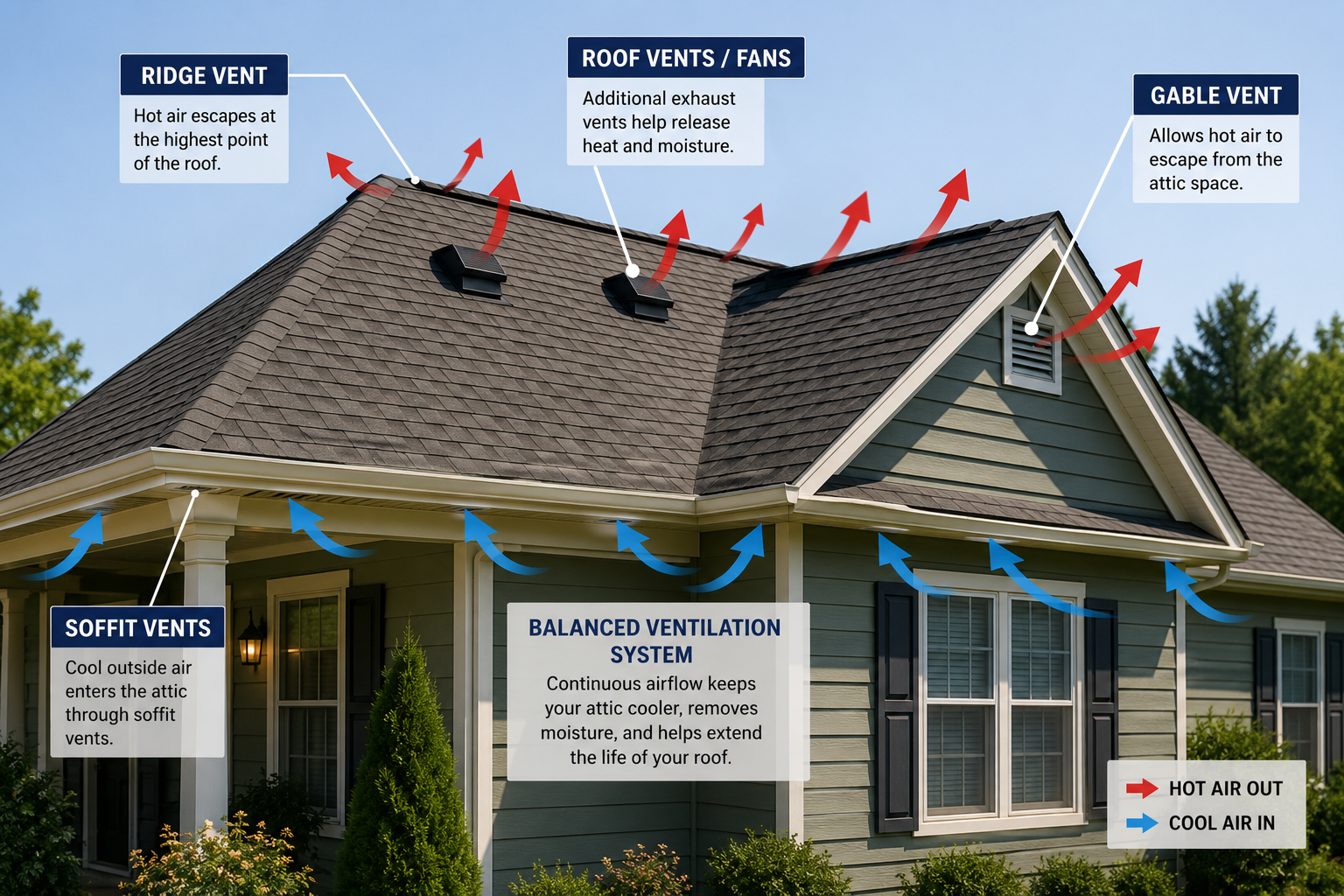
A balanced ventilation system often includes:
Soffit Vents – Allow cooler outside air into the attic.
Ridge Vents – Let hot air naturally escape from the roof peak.
Gable Vents – Found on some homes to improve cross-ventilation.
Roof Vents – Box vents or powered vents used when ridge vents aren't practical.
Every home is different, and the right ventilation system depends on your roof's design. We can help with that!
Ventilation Matters for Insurance, Too
If your roof has suffered storm damage or you're filing an insurance claim, the overall condition of your roofing system—including ventilation—can play an important role in its long-term performance.
At Dale Rimmer Siding, we perform roof inspections for insurance company requests and can help identify issues that may affect the health of your roofing system.
Don't Wait Until Problems Start
Many ventilation problems go unnoticed until they lead to sometimes EXPENSIVE repairs or premature roof replacement. A professional inspection can determine whether your attic has adequate airflow and whether your current ventilation system is performing as it should.
Schedule Your Free Roof Estimate
Whether you're considering a roof replacement, concerned about excessive attic heat, or need a roof inspection for an insurance claim, we're here to help.
For more than 44 years, Dale Rimmer Siding has helped homeowners throughout Bucks and Montgomery Counties protect their homes with quality roofing systems designed to perform in Pennsylvania's changing seasons.
